Astrological Delineation with Unknown Birth Time
An unknown birth time doesn't ruin your chart: the Sun, Moon and planets are unaffected: only the Ascendant, houses and angles need careful handling.
Written and reviewed in house by the AstroStarCheck research team. Astronomical positions come from the Swiss Ephemeris; interpretive rules are checked against the classical texts listed under Sources.
The Astronomical Reality of Missing Time: The Divide Between Invariants and Drifting Angles
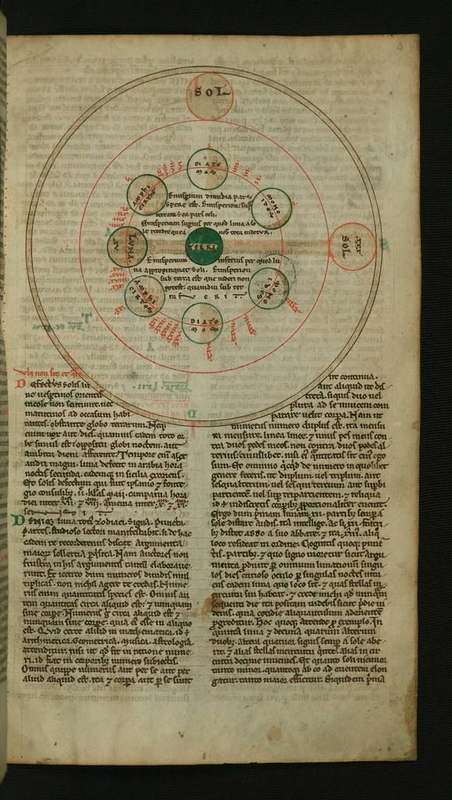
In astronomical calculations, the precision of the birth timestamp dictates the mathematical reliability of the horoscope. Because the Earth completes one axial rotation every 24 hours, the celestial horizon (Ascendant/Descendant) and meridian (Midheaven/Nadir) sweep through the ecliptic at a rapid velocity of approximately one degree every four minutes. When birth time is unknown, all house systems (whether quadrant-based like Placidus or equal-house models) and the four cardinal angles become entirely invalid. However, the heliocentric revolution of the planets proceeds at a vastly slower pace. Within a single calendar day, the Sun moves only about one degree, inner planets advance by one to two degrees, and outer planets remain virtually stationary. Recognizing this astronomical divergence is essential for interpreting a chart with missing birth data.
Planetary Invariants: The Reliable Core Structure Independent of Birth Hour
Even without knowing the exact hour or minute of birth, a horoscope calculated for the calendar date preserves the vast majority of vital planetary invariants. The Sun sign and its degree (accurate within ±0.5 degrees) reliably defines core ego identity, conscious vitality, and overarching purpose. Mercury and Venus placements, along with their angular relationships to other planets, remain mathematically dependable, revealing cognitive processing patterns, communication style, and relational values. Furthermore, the aspect network among Mars, Jupiter, Saturn, Uranus, Neptune, and Pluto remains consistent throughout the entire 24-hour window. Foundational psychological tensions and generational archetypes (such as a Saturn-Pluto opposition or a Jupiter-Neptune trine) are fully interpretable.
Lunar Uncertainty: Quantifying the Error Margin of the Noon Chart
The Moon is the fastest-moving body in the astrological system, traveling between 12 and 14 degrees of celestial longitude per day (roughly one degree every two hours). Consequently, over a 24-hour period, the Moon may change signs or complete significant aspects. The standard technical solution is the Noon Chart, set to 12:00 PM local solar time. By anchoring the calculation to the temporal midpoint of the day, the maximum error in lunar longitude is bounded within ±6 to ±7 degrees. If the Noon Moon falls at 15 degrees of a sign, the lunar sign is guaranteed for the entire day. However, if the Moon is positioned within the first or last six degrees of a sign, practitioners must acknowledge that a sign transition may have occurred.
The Solar House System: An Alternative Framework Anchored to the Sun
When the true Ascendant is unobtainable, astrologers utilize the Solar House System (or Sunrise Chart) as a disciplined alternative. In this framework, the exact zodiacal degree of the natal Sun serves as the cusp of the 1st house, with the remaining eleven houses projected in equal 30-degree increments. Because the Sun represents the conscious ego, personal vitality, and outward purpose, solar houses provide a legitimate perspective on how an individual allocates creative energy, pursues social recognition, and realizes long-term ambitions. While solar houses cannot time localized domestic events, they offer a coherent, psychologically grounded framework for charts with unknown birth times.
Valid Boundaries for Predictive Timing: Filtering Viable Timing Clocks
Predictive forecasting without an exact birth time is possible, but strictly limited to techniques that do not rely on angles or house cusps. Valid timing methods include transits of outer planets (Saturn, Uranus, Neptune, Pluto) to natal personal planets (Sun, Mercury, Venus, Mars), which reliably highlight prolonged life chapters and psychological restructuring. Additionally, solar arc directions of the Sun to slower natal planets provide valid developmental markers. Conversely, all angle-dependent techniques (such as solar arcs to the Midheaven), progressed Moon house ingresses, and sect-dependent Firdaria periods must be excluded to prevent unfounded speculation.
Heuristic Methods for Narrowing the Birth Window: From 24 Hours to a 2-Hour Interval
When attempting to recover an unknown birth time, practitioners follow a structured heuristic approach. First, examine diurnal biological rhythms and circadian preferences to differentiate between a day chart (morning vitality) and a night chart (nocturnal focus), incorporating fragmentary family memories. Second, cross-examine physical typologies and habitual first impressions associated with candidate rising signs. Third, identify two or three major documented life turning points, utilizing outer planet transits and solar arcs to locate probable angle alignments. This systematic workflow can frequently narrow an ambiguous 24-hour day down to a specific two-hour window, establishing the foundation for future rectification.
Ethical Discipline and Epistemic Humility: Rejecting Fabricated Certainty
AstroStarCheck adheres to strict intellectual integrity: when a user selects 'Unknown Birth Time', the system automatically disables the display of house cusps and cardinal angles, presenting only verified planetary signs, stable aspects, and explicit lunar uncertainty margins. We firmly reject the practice of inventing house cusps or guessing rising signs merely to provide artificial comfort. Acknowledging data limitations and maintaining a clear line between mathematical certainty and probabilistic speculation is the cornerstone of responsible astrology and respectful counsel.
FAQ
Can I use the core calculation engine if I have no record of my birth time?
Yes. The system automatically generates a calibrated Noon Chart, computing the exact positions and aspect networks for the Sun, Mercury, Venus, Mars, and all outer planets. These planetary configurations provide deep insight into your psychological blueprint and core talents.
What is the maximum margin of error for the Moon in a Noon Chart?
Because the Moon moves roughly 13 degrees per day, setting the chart to 12:00 PM creates a maximum error margin of ±6 to ±7 degrees. If the Noon Moon is located near the middle of a sign (such as 15°), the sign is certain; if it sits near the boundaries (0°-6° or 24°-30°), the Moon may have changed signs during that day.
How should I determine my Firdaria planetary period if my birth time is unknown?
If it is impossible to confirm whether you were born before sunrise or after sunset, Firdaria should not be used. Diurnal and nocturnal charts use completely inverted planetary sequences. In such cases, focus instead on outer planet transits to natal planets.
Why is it unacceptable to guess an Ascendant or Midheaven when the birth time is missing?
The Ascendant and Midheaven rotate at a rate of one degree every four minutes, shifting through an entire zodiac sign every two hours. Without an approximate birth hour, assigning an Ascendant is pure guesswork with zero astronomical validity.
If I only know that I was born in the morning or evening, can I calculate a chart?
Yes. If family memory confirms a morning birth (such as between 6:00 AM and 10:00 AM), calculating a chart for 8:00 AM narrows the possible Ascendants to two adjacent signs and reduces lunar error to roughly ±2 degrees, greatly improving interpretive utility.
Sources and further reading
Astronomical positions and interpretive rules on this page are checked against these works.
- Swiss Ephemeris (Astrodienst) (the ephemeris library behind every chart calculation)
- Ptolemy, Tetrabiblos. Loeb Classical Library, 1940. LacusCurtius, University of Chicago
- Tetrabiblos, Book I §§ 1–3 (the classical argument that astronomy can support prediction)
- William Lilly, Christian Astrology, 1647 (Skyscript)