Foundations of Natal Chart Interpretation
Start a natal chart with three things: the Sun (core self), the Moon (emotional needs) and the Ascendant (outer image): then ease into houses and aspects.
Written and reviewed in house by the AstroStarCheck research team. Astronomical positions come from the Swiss Ephemeris; interpretive rules are checked against the classical texts listed under Sources.
Celestial Coordinates and Ecliptic Projection
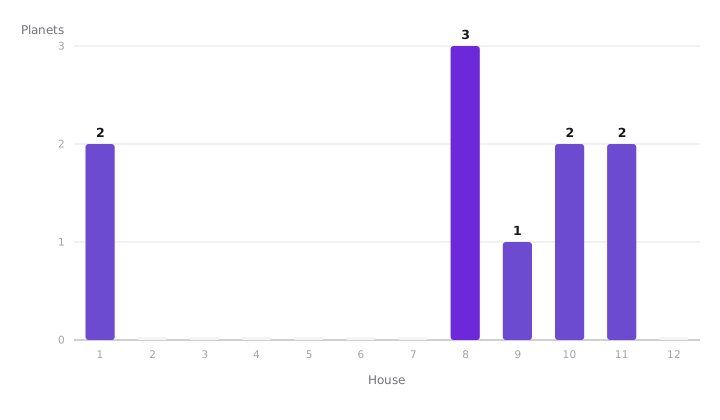
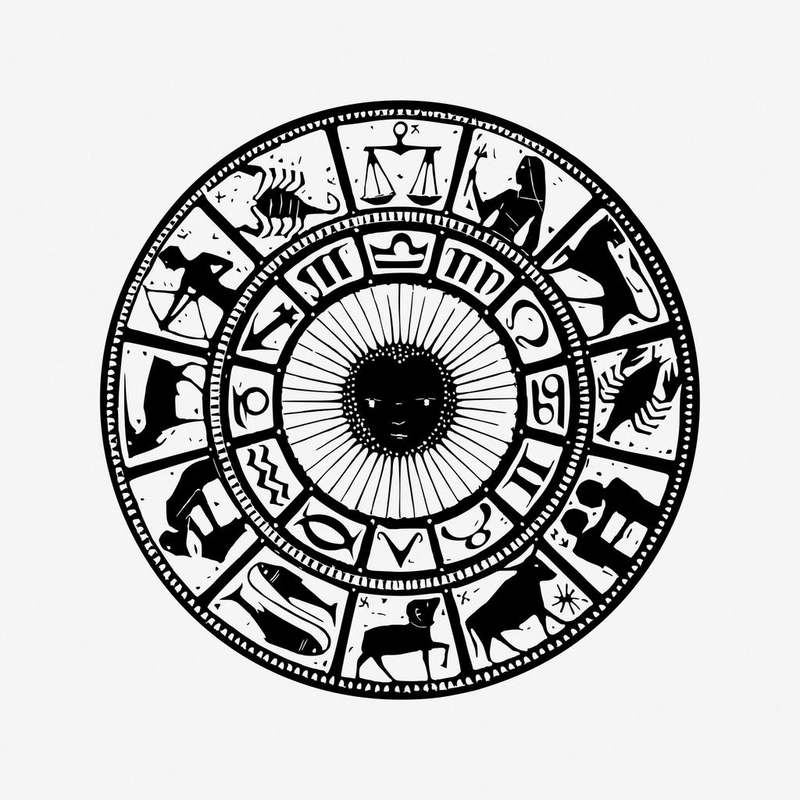
The natal chart is rooted in the empirical geometry of observational astronomy. When an individual takes their first breath at a specific latitude and longitude on Earth, the local horizon intersects the celestial equator and the ecliptic path in three-dimensional space. The ecliptic, which represents the apparent annual path of the Sun against the background stars, is divided into twelve equal thirty-degree arcs known as the zodiac. A natal chart functions as an astronomical projection of this celestial sphere onto a two-dimensional plane. Planetary positions are calculated along their ecliptic longitudes, while the interaction between the local horizon and meridian generates the twelve houses. To understand astrology beyond commercial simplifications, one must first appreciate this geometric foundation, recognizing the planets as energetic sources, the zodiac signs as filtering media, and the astrological houses as specific terrestrial environments where life experience unfolds.
The Core Triad: Sun, Moon, and Ascendant
Among the celestial factors in any birth chart, the Sun, Moon, and Ascendant form the fundamental architecture of human personality. The Sun embodies the central conscious ego and the intentional purpose that an individual strives to actualize over time. The Moon rules the subconscious domain, emotional regulation, somatic memories, and instinctual security needs. The Ascendant marks the exact degree of the eastern horizon rising at the moment of birth, defining the physical incarnation, behavioral interface, and primary cognitive lens through which the world is perceived. These three factors operate as an integrated dynamic system: the Ascendant constructs the functional bridge between the self and society, the Sun supplies creative purpose and directional willpower behind that interface, and the Moon sustains emotional equilibrium and bodily vitality. Interpreting a chart requires understanding how these three distinct components collaborate or struggle against one another.
The Sun: Solar Will, Individuation, and Life Purpose
Throughout classical and modern astrological traditions, the Sun stands as the supreme luminary of conscious vitality. Claudius Ptolemy in his Tetrabiblos identified the Sun as the primary source of the vital spirit, while twentieth-century analytical psychology associated the solar principle with the process of individuation described by Carl Jung. The zodiac sign and house position of the Sun describe the specific arena where an individual must consciously labor to construct an authentic self. Unlike instinctive emotional reactions, solar consciousness is rarely fully developed at birth; it represents a heroic journey of self-realization demanding continuous effort, moral courage, and deliberate purpose. When the Sun is well dignified and positioned in an angular or succedent house, it confers clear direction and self-reliance. When afflicted, the native must undertake profound inner work to overcome self-doubt and establish sovereign self-worth through deliberate creative achievement.
The Moon: Instinctual Ground, Emotional Matrix, and Bodily Rhythm
While the Sun illuminates the daytime world of external accomplishment, the Moon governs the private night of the soul. Astronomically, the Moon is our nearest celestial companion, completing its orbit in less than twenty-eight days. This rapid motion correlates directly with circadian rhythms, autonomic nervous system responses, and childhood attachment patterns. The lunar sign and house placement reveal the native's immediate emotional reflex under stress and the specific conditions required to feel fundamentally safe. When confronted by sudden disruption, human behavior responds first through lunar defense mechanisms rather than solar deliberation. Interpreting the Moon requires understanding somatic holding patterns and emotional needs, allowing the native to honor vulnerability rather than suppress it, thereby building an enduring psychological foundation for the solar purpose.
The Ascendant: The Portal of Incarnation and Chart Ruler
The Ascendant, termed Horoskopos in Hellenistic astrology meaning the hour-watcher, represents the intersection of the eastern horizon with the ecliptic circle. Classical masters including Antiochus of Athens and Vettius Valens designated this point as the Helm of the entire chart. The Ascendant defines the physical constitution, personal demeanor, and spontaneous mannerisms that characterize an individual's first contact with the environment. It acts as an automatic cognitive filter, setting expectations regarding whether life is welcoming, challenging, or neutral. Crucially, the planetary ruler of the Ascendant, known as the Lord of the Geniture or Chart Ruler, serves as the primary captain of the native's life path. The sign, house, and aspects of the chart ruler outline the principal operational vessel through which the soul engages with material reality.
The Four Angles: Cardines of Material Manifestation
The structural scaffolding of the natal wheel rests upon four cardinal angles formed by the intersection of the horizon and meridian axes. The horizontal axis connects the Ascendant in the east with the Descendant in the west, representing the psychological polarity between independent selfhood and committed interpersonal partnership. The vertical meridian connects the Imum Coeli at the bottom with the Midheaven at the top, capturing the dynamic tension between ancestral roots, home life, and public social standing. These four angular points generate the angular houses (First, Fourth, Seventh, and Tenth), which serve as prime focal points for planetary manifestation. Planets stationed within close orb of these angles are endowed with immense accidental strength, compelling their archetypal themes to manifest prominently in the native's outer biography.
The Doctrine of Sect: Day Versus Night Charts
In traditional Hellenistic and Medieval Arabic astrology, the doctrine of sect (Hairesis) is the primary interpretive foundation. A chart is classified as diurnal if the Sun resides above the horizon axis (houses seven through twelve) and nocturnal if the Sun rests below the horizon (houses one through six). In a day chart, the Sun acts as the primary luminary, supported by the diurnal team of Jupiter and Saturn, creating an atmosphere where intellectual clarity, structure, and outward growth flourish. In a night chart, the Moon assumes central leadership, supported by the nocturnal team of Venus and Mars, emphasizing emotional resonance, subjective experience, and relational depth. Evaluating a natal chart without first determining its sect obscures whether the Sun or the Moon holds executive operational authority.
A Synthetic Interpretation Protocol for Natal Analysis
To read a natal chart with professional precision, the astrologer must synthesize separate astrological elements into an organic whole rather than reciting disconnected cookbook definitions. A disciplined analytical protocol proceeds through four clear stages. First, determine the sect of the chart to establish the primary luminary and the operational environment. Second, examine the Ascendant, its bounding terms, and the condition of the chart ruler to understand the primary life trajectory. Third, analyze the aspectual dialogue between the Sun and Moon to assess harmony or tension between conscious ambition and emotional security. Fourth, evaluate the planets occupying the four cardinal angles to identify the concrete thematic arenas where fate and personal choice will intersect. This structured method transforms complex astronomical geometry into a coherent narrative of human potential.
FAQ
Why does relying solely on a Sun sign produce inaccurate personality profiles?
The Sun sign reflects only core conscious motivations, which represent a small fraction of the total psyche. Immediate behavioral reactions are filtered through the Ascendant, emotional security is governed by the Moon, communication styles are shaped by Mercury, and drives are steered by Mars. Without integrating the Ascendant, the Moon, and the network of planetary aspects, single-sign descriptions inevitably oversimplify complex human nature.
How can one resolve psychological tension between conflicting Sun and Moon signs?
A hard aspect such as a square or opposition between the Sun and Moon indicates a dynamic friction between conscious aspirations and deep emotional needs. For example, an Aries Sun seeking bold independence paired with a Cancer Moon requiring domestic safety creates an internal push-pull dynamic. Resolving this tension involves creating designated life domains for each: pursuing ambitious goals in professional endeavors while deliberately establishing protected, nurturing routines at home.
How does an inaccurate birth time distort chart interpretation?
Because the Earth rotates once every twenty-four hours, the Ascendant degree moves approximately one degree every four minutes and shifts into a new zodiac sign roughly every two hours. An error of even twenty minutes can change the rising sign, relocate house cusps, and alter the houses where planets reside. Furthermore, because the Moon travels roughly thirteen degrees per day, an uncertain birth time obscures lunar aspects and house placement.
What is the difference between Whole Sign and quadrant house systems like Placidus?
Whole Sign houses assign the entire zodiac sign containing the Ascendant to the first house, maintaining clean sign-house alignment suitable for traditional timing techniques. Quadrant systems such as Placidus, Regiomontanus, or Koch calculate house cusps based on precise time divisions of the diurnal arc, frequently producing houses of unequal size and intercepted signs. Beginners benefit from using Whole Sign houses to grasp structural foundations before testing quadrant boundaries.
Why is the doctrine of sect considered the primary filter in classical astrology?
Sect determines the fundamental optical and thermodynamic quality of the chart. In a day chart, the Sun possesses direct authority, moderating the coldness of Saturn and amplifying the generosity of Jupiter. In a night chart, the Moon leads the psyche, cooling the heat of Mars and enhancing the charm of Venus. Without checking sect, an interpreter cannot accurately gauge the constructive or disruptive potential of planetary placements.
Sources and further reading
Astronomical positions and interpretive rules on this page are checked against these works.
- Swiss Ephemeris (Astrodienst) (the ephemeris library behind every chart calculation)
- Ptolemy, Tetrabiblos. Loeb Classical Library, 1940. LacusCurtius, University of Chicago
- Tetrabiblos, Book I §§ 1–3 (the classical argument that astronomy can support prediction)
- William Lilly, Christian Astrology, 1647 (Skyscript)