Historical Backtesting and Birth Time Rectification
The backtest measures how often the rule engine hits on historical samples: it validates whether a method has systematic bias, not a crystal ball for the future.
Written and reviewed in house by the AstroStarCheck research team. Astronomical positions come from the Swiss Ephemeris; interpretive rules are checked against the classical texts listed under Sources.
The Empirical Methodology of Backtesting: Time Inversion and Milestone Anchors
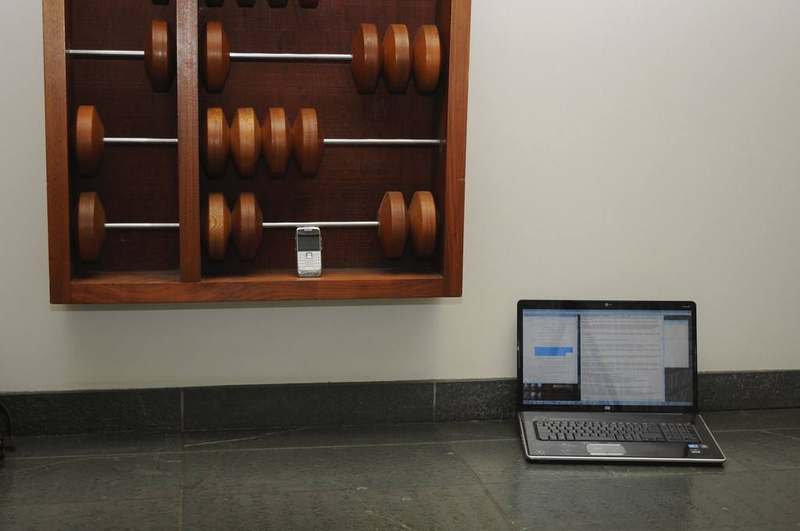
For astrology to provide genuine intellectual and diagnostic value, its claims must withstand rigorous retrospective testing against documented life history. Backtesting refers to the systematic alignment of an individual's major biographical milestones (such as marriage, property acquisitions, major surgeries, career breakthroughs, or family bereavements) along an exact chronological timeline. By calculating the planetary configurations active during those specific dates across multiple timing models (primary directions, secondary progressions, solar arcs, Firdaria, and transits), researchers can determine whether symbolic activations correlate with verifiable life transitions. This empirical process validates the interpretive reliability of the chart.
Defending Against Cognitive Bias: Filtering Hindsight and the Barnum Effect
Retrospective chart analysis is highly vulnerable to Confirmation Bias and Hindsight Bias. Because a birth chart contains numerous aspects, midpoints, and house rulers, an undisciplined observer can easily find some minor symbolic justification for any known past event. The computational framework at AstroStarCheck defends against this hazard by enforcing strict baseline criteria. Event categories are rigidly mapped to specific house rulers before analysis, and aspect orbs are restricted to minimal windows (such as an exact 1-degree limit for solar arcs). This algorithmic rigor filters out background noise, preventing random geometric coincidences from being misconstrued as destiny.
The Mathematical Foundations of Rectification: Rapid Ascension of the Four Angles
Birth time rectification is the most mathematically demanding branch of technical astrology. Driven by the Earth's axial rotation, the four primary angles of the horoscope (Ascendant, Midheaven, Descendant, and Nadir) drift rapidly, covering approximately one degree of right ascension every four minutes. An error of merely ten minutes in reported birth time shifts the Midheaven and Ascendant by roughly 2.5 degrees. This discrepancy can misplace planetary house cusps and introduce a systematic error of two and a half years in solar arc timing. Rectification is the mathematical inversion process of utilizing precisely dated life events to deduce the exact celestial coordinates of the natal angles at the moment of the first breath.
Multi-System Time Resonance: The Necessity of Concurrent Verification
Reliable rectification rejects single-indicator coincidences, adhering strictly to the principle of multi-system resonance. Major life transformations manifest simultaneously across multiple timing techniques operating at different temporal scales. In a true milestone year, the macro-level Firdaria period ruler shifts to govern the active house; the mid-level solar arc direction directs an active planetary archetype into an exact hard contact with an angle; the secondary progressed Moon changes houses or signs; and slow-moving transiting planets station directly upon chart angles. Only when these distinct timing systems align in unified symbolic consensus does a proposed rectified birth time attain high diagnostic validity.
Orb Calibration and Error Minimization: Approaching Exactness
In solar arc backtesting, the exact alignment of a directed planet to a natal angle corresponds to the peak manifestation of an external event. Because solar arc directions advance at approximately 0.9856 degrees per year, a geometric discrepancy of 0.1 degrees translates to roughly 37 days of real time. By inputting three to five well-documented historical milestones spread across different decades, the rectification algorithm generates intersecting error curves. Utilizing least-squares optimization, the algorithm systematically narrows a vague thirty-minute birth window down to an exact minute and second, correcting inaccuracies in hospital logs or family memory.
Quantitative Scoring and Confidence Intervals in the Backtest Matrix
The backtesting matrix assigns stratified weighting coefficients to different categories of biographical data. Physical events involving bodily integrity (such as surgical interventions or accidents) receive the highest weighting because they correlate directly with the 1st and 8th houses. Legally documented social milestones (such as marriages, home deeds, and formal graduations) carry high secondary weighting. Subjective psychological shifts, while personally meaningful, receive lower quantitative weight due to recall bias. The system evaluates aspect tightness, planetary dignity, and house ruler involvement to produce an objective Confidence Score for the final rectified chart.
Probabilistic State Spaces: Transcending Fatalistic Determinism
Viewed through the lens of modern epistemology, astrological backtesting reveals probability distributions and psychic energy concentrations rather than rigid fatalistic scripts. The horoscope does not compel specific mechanical actions; rather, it highlights temporal windows where internal psychological readiness and external environmental feedback reach peak intensity. The ultimate purpose of rigorous backtesting is not to cultivate passive fatalism, but to illuminate recurring developmental patterns. By understanding how past cycles unfolded, individuals can navigate upcoming time windows with heightened clarity, intentionality, and conscious agency.
FAQ
How many historical milestones are required for a statistically reliable birth time rectification?
A reliable rectification requires at least three to five major life milestones with exact calendar dates. Ideal events include marriages, property acquisitions, major surgeries, career promotions, relocations, or the passing of immediate family members. Events spread across different decades yield the highest mathematical accuracy.
If a birth certificate records an exact minute, is rectification still necessary?
Yes. Hospital clocks are frequently uncalibrated, and medical staff often round recorded times to the nearest five or ten minutes after delivery. Because an error of just four minutes shifts solar arc timing windows by an entire year, minor adjustments are essential for precision forecasting.
Why are outer planet transits preferred over inner planets as primary rectification anchors?
Outer planets (Saturn, Uranus, Neptune, Pluto) move slowly, remaining in contact with chart angles for months and generating structural, irreversible life transformations. Inner planets move rapidly and cross angles multiple times each year, creating too much background noise to serve as definitive anchors.
How does an astrologer resolve ambiguities when calculations suggest two plausible birth times?
When mathematical models produce two local optima separated by several minutes, practitioners perform qualitative cross-verification. They examine physical appearance archetypes linked to the rising sign, childhood home environments (4th house condition), and psychological crises during progressed Moon sign shifts to eliminate false positives.
How does the backtesting algorithm handle historical events known only by month or year?
When an event lacks a precise day, the algorithm widens the acceptable aspect orb (to roughly ±0.5 degrees) and assigns a lower quantitative weighting coefficient. The system relies primarily on exact dates for precision calculations, utilizing approximate dates solely for secondary consistency verification.
Sources and further reading
Astronomical positions and interpretive rules on this page are checked against these works.
- Swiss Ephemeris (Astrodienst) (the ephemeris library behind every chart calculation)
- Swiss Ephemeris programmer's documentation (computation parameters and API reference)
- Introduction to the Tetrabiblos (Skyscript)
- Hellenistic astrology (historical and technical resources on Hellenistic practice)